VibeOS
Cockpit for coding agentsCockpit for coding agents
Agents that code, one control room.


The context
I code with several agents in parallel, Codex and Claude Code. In a tabbed terminal, by the third one I’d lost track of who was doing what, and each moved ahead without knowing what its neighbour was doing: same files, decisions that contradict each other.
The challenge
Make a team that works fast and silently readable: who codes what, who talks to whom, what it costs, without turning supervision into watching every line.
My answer
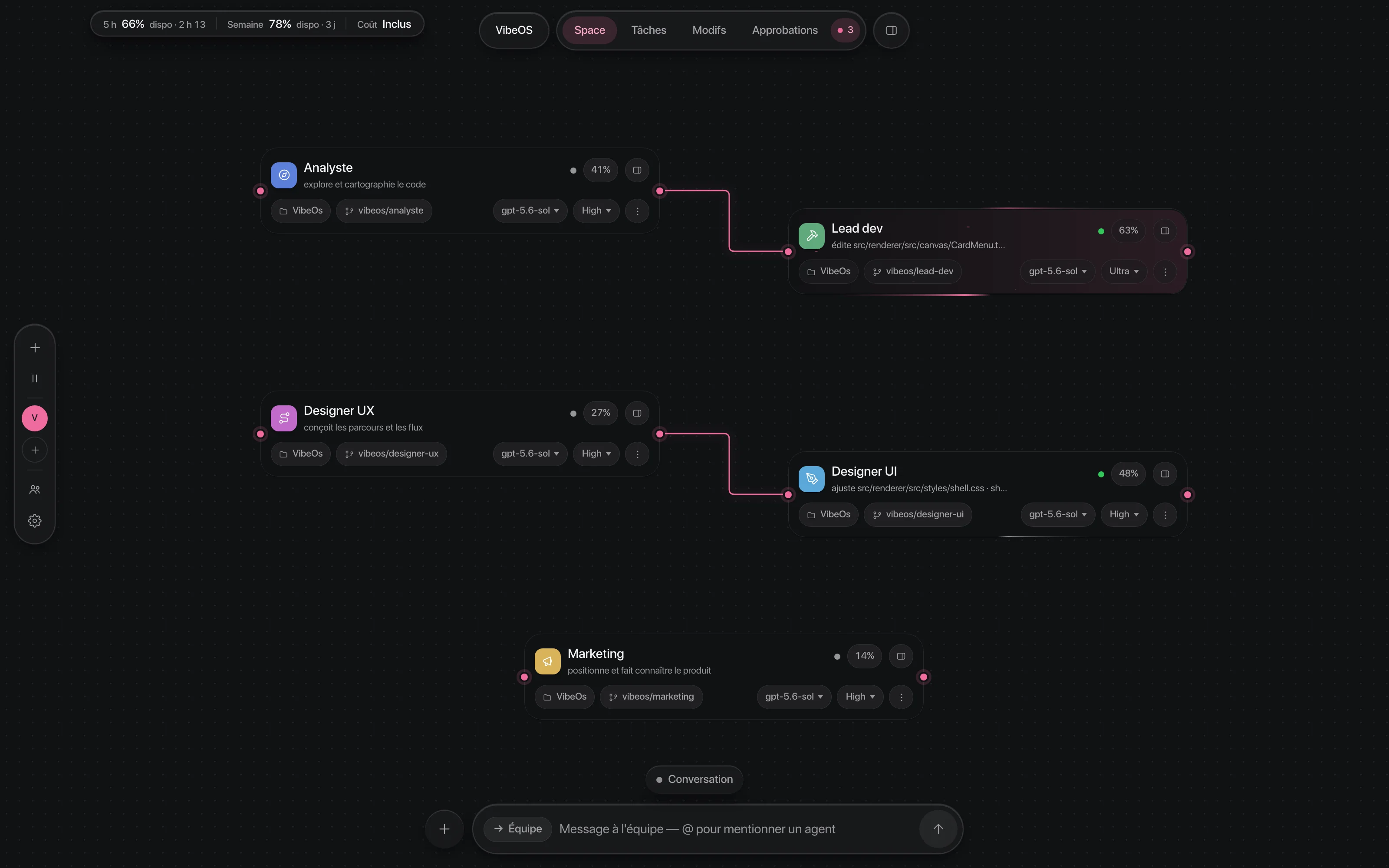
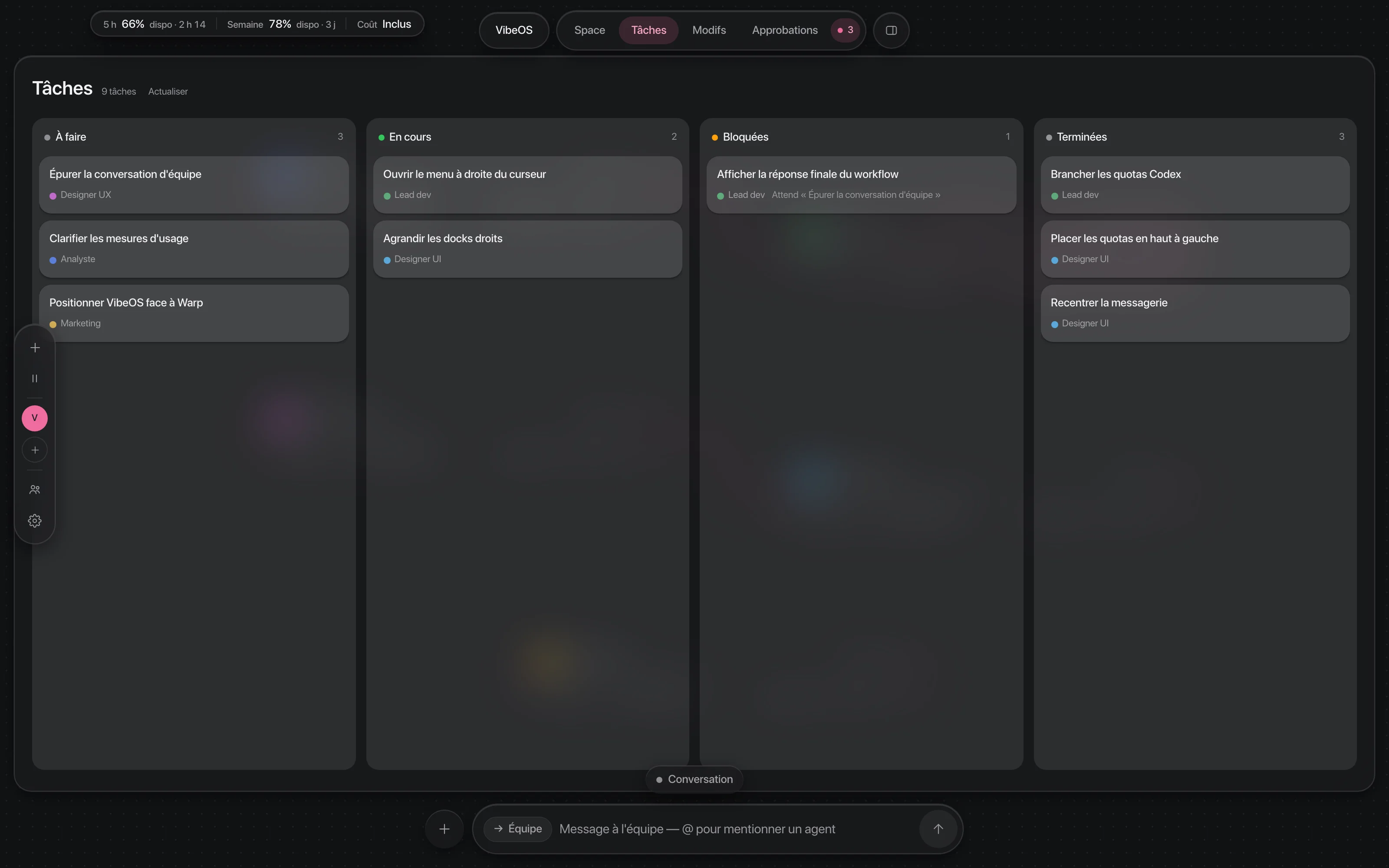
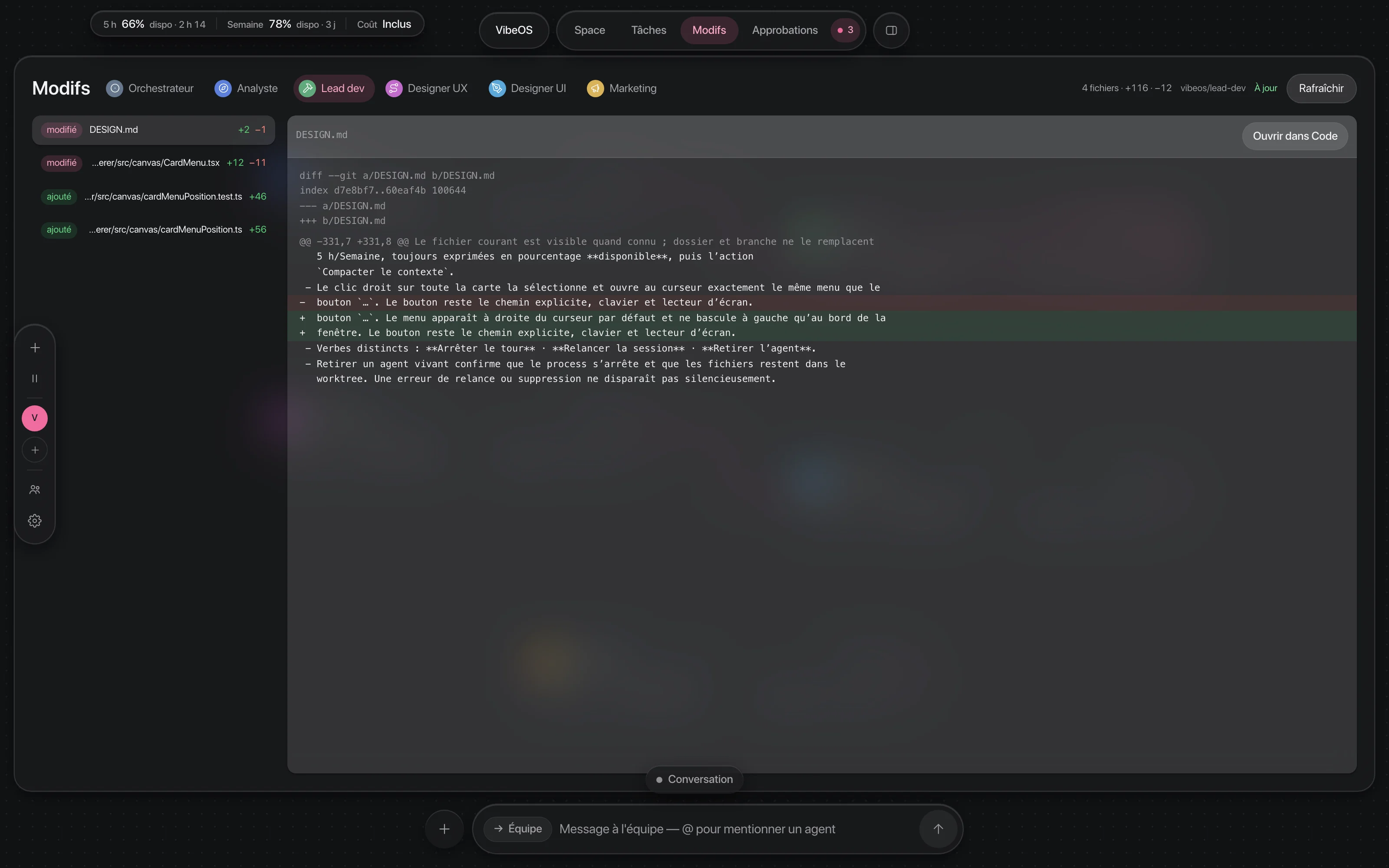
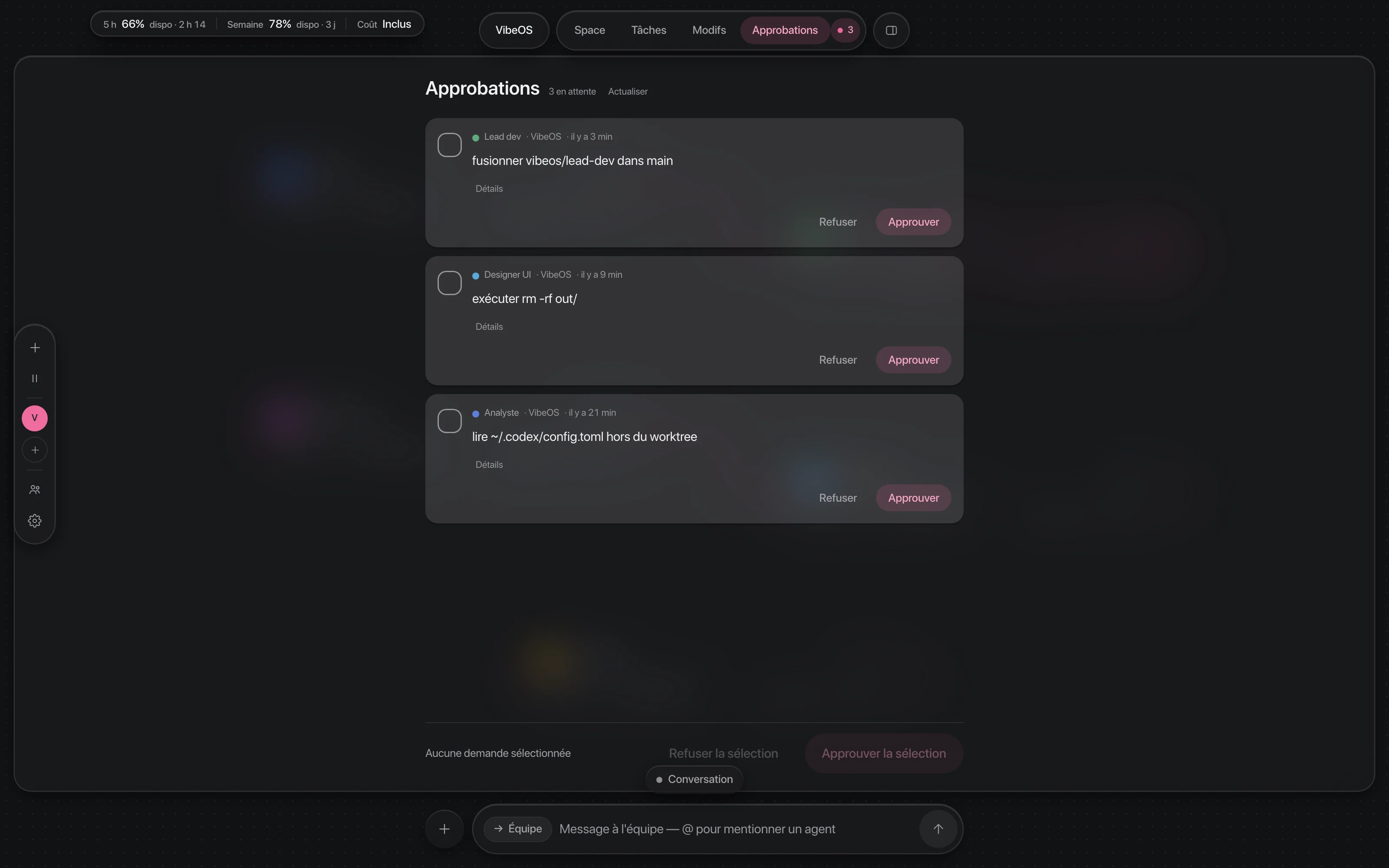
A Mac cockpit built on top of the official tools. Each agent is a card on a canvas, isolated by default, and you wire them with a cable when they need to agree. Around it, glass panels that fold away: tasks, changes, approvals. A single pink accent, reserved for connection.
The result
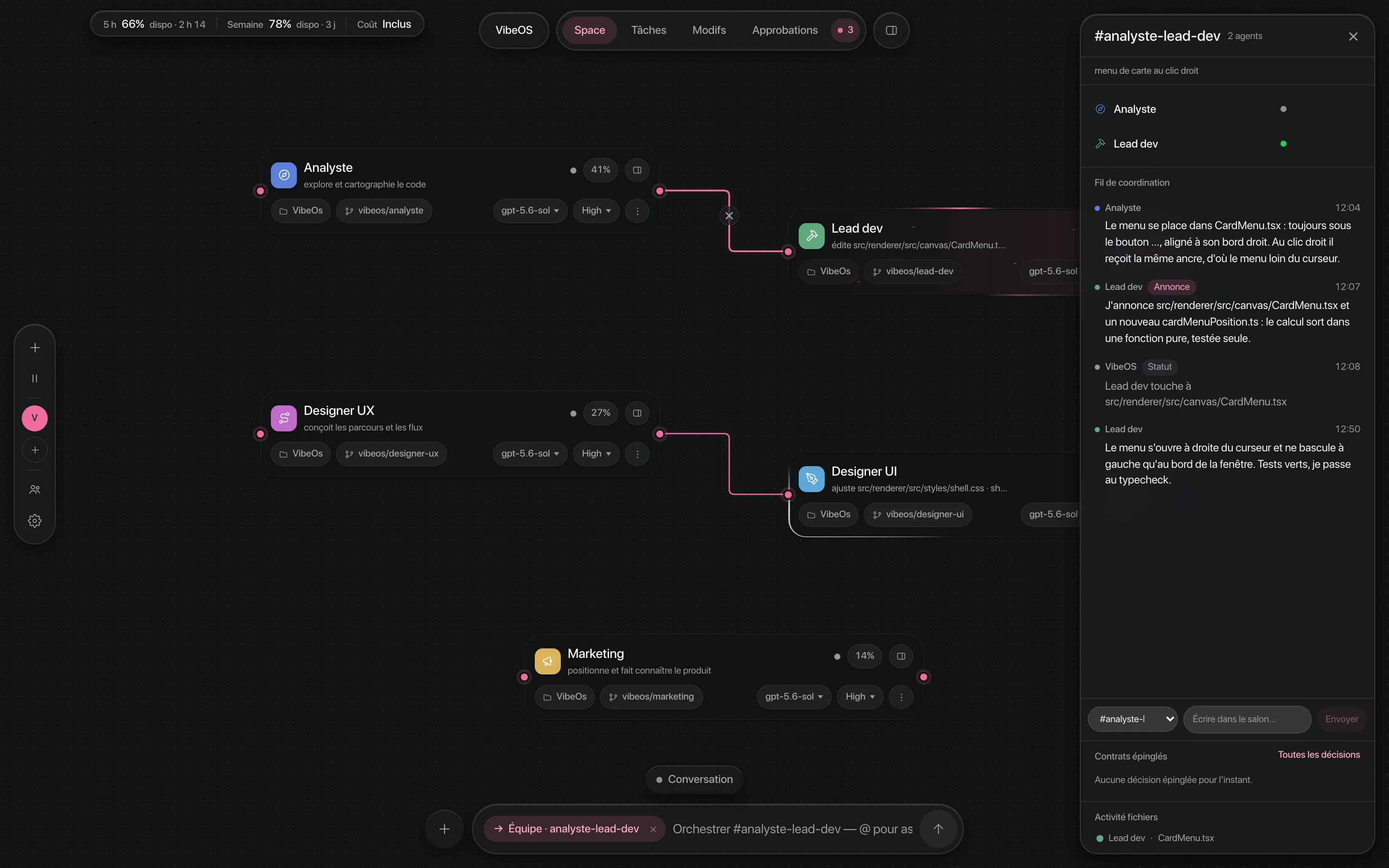
An app for real work, not a demo: real Codex or Claude Code agents, each in its own copy of the project, rooms where they coordinate, live tasks, and risky actions waiting for my go-ahead. I designed it, then had it built by a team of agents, each in its own area.
What VibeOS can do
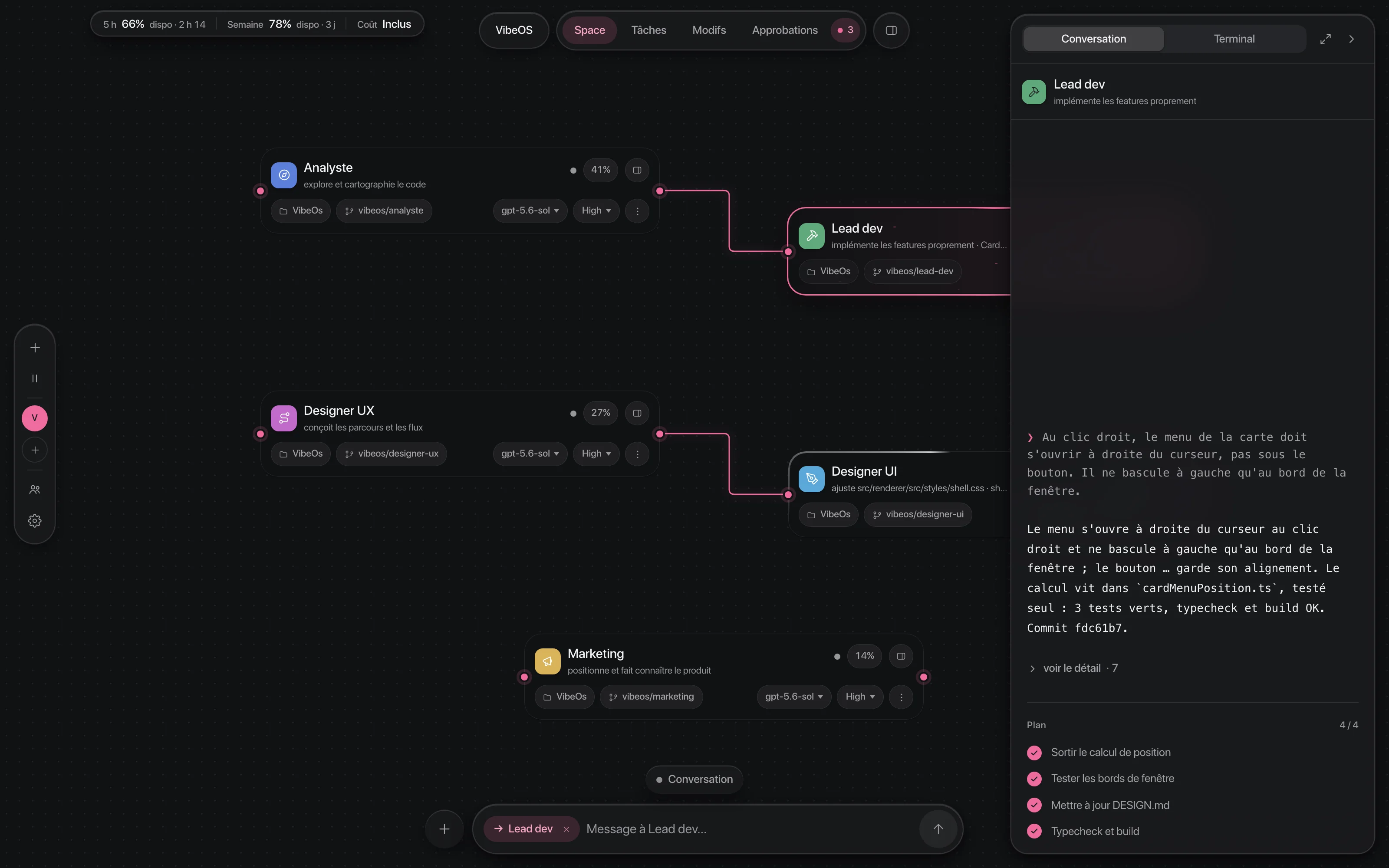
Launch real Codex or Claude Code agents, each in its own copy of the project
Wire them with a cable, in pairs or in groups, then unplug them
Talk to the whole team from a single bar: the Orchestrator splits the request
See live what each agent touches, and its context filling up
Freeze an agreement between two agents as a contract that outlives the unplugging
Approve risky actions in batches, from a calm approvals inbox
The app, for real.
VibeOS’s real interface, wired to a demo team (in French, like the app).